

In aesthetic medicine, great results begin long before a treatment is performed.
A technically excellent procedure can still leave a patient disappointed if their expectations were not understood, their concerns were overlooked, or the treatment plan did not reflect what they truly wanted to achieve.
For aesthetic healthcare professionals, consultation skills are just as important as clinical skills. The consultation is where trust is established, expectations are shaped, suitability is assessed, and the foundations for a successful outcome are laid.
Yet, consultations can easily become too focused on the treatment itself. We may spend time explaining the benefits of a particular procedure, discussing products or demonstrating our technical knowledge, while missing the most important part: understanding the person sitting in front of us.
So, what consultation skills help prevent disappointing outcomes?

1. Listen before you recommend
One of the most valuable consultation skills is the ability to listen without immediately jumping to a solution.
Patients often arrive with a treatment in mind. They may have researched a procedure online, seen results on social media, or been influenced by a friend's experience. However, what they ask for and what they actually need may be two different things.
Rather than immediately agreeing to their requested treatment, take time to explore their concerns.
Ask open questions such as:
- "What is it about this area that bothers you?"
- "When did you first start noticing it?"
- "What would you most like to change?"
- "How would you feel if we could improve this for you?"
- "Have you had any previous treatments, and how did you feel about the results?"
These questions help you understand the motivation behind the request, rather than simply responding to the treatment they have asked for.
Active listening also means paying attention to what patients don't say. Their tone, body language, hesitation and emotional responses can provide important clues about their expectations and concerns.
Resist the temptation to interrupt, fill every silence or demonstrate your knowledge too early. Sometimes, the most valuable thing you can do is give a patient the space to explain.
2. Understand expectations before discussing treatments
Unrealistic expectations are one of the most common reasons patients feel disappointed with aesthetic treatment.
A patient may expect a complete transformation when only a subtle improvement is clinically achievable. Another may believe that one treatment will address several different concerns, or that the results they have seen on social media are representative of what they can expect.
This is why expectation management needs to happen before treatment recommendations are made.
Ask patients what they expect the treatment to achieve. Encourage them to describe their ideal outcome in their own words.
You might ask:
- "What would a successful result look like to you?"
- "Are you hoping for a subtle improvement or a more noticeable change?"
- "What would disappoint you about the outcome?"
- "Are there any particular results you have seen that you would like to achieve?"
These questions can uncover significant differences between what the patient wants and what you believe is realistically achievable.
Be honest about limitations. Explain what treatment can improve, what it cannot change, and whether the likely outcome will match their expectations.
Remember that managing expectations does not mean talking patients into accepting less. It means helping them make informed decisions based on realistic outcomes.
3. Learn to recognize when the requested treatment isn't the right treatment
Patients are not always best placed to determine which treatment will address their concerns. That is why they seek professional advice.
A patient might request dermal filler when their primary concern would be better addressed through another intervention. Someone may believe they need more volume when their concern relates to skin quality, laxity or facial proportions.
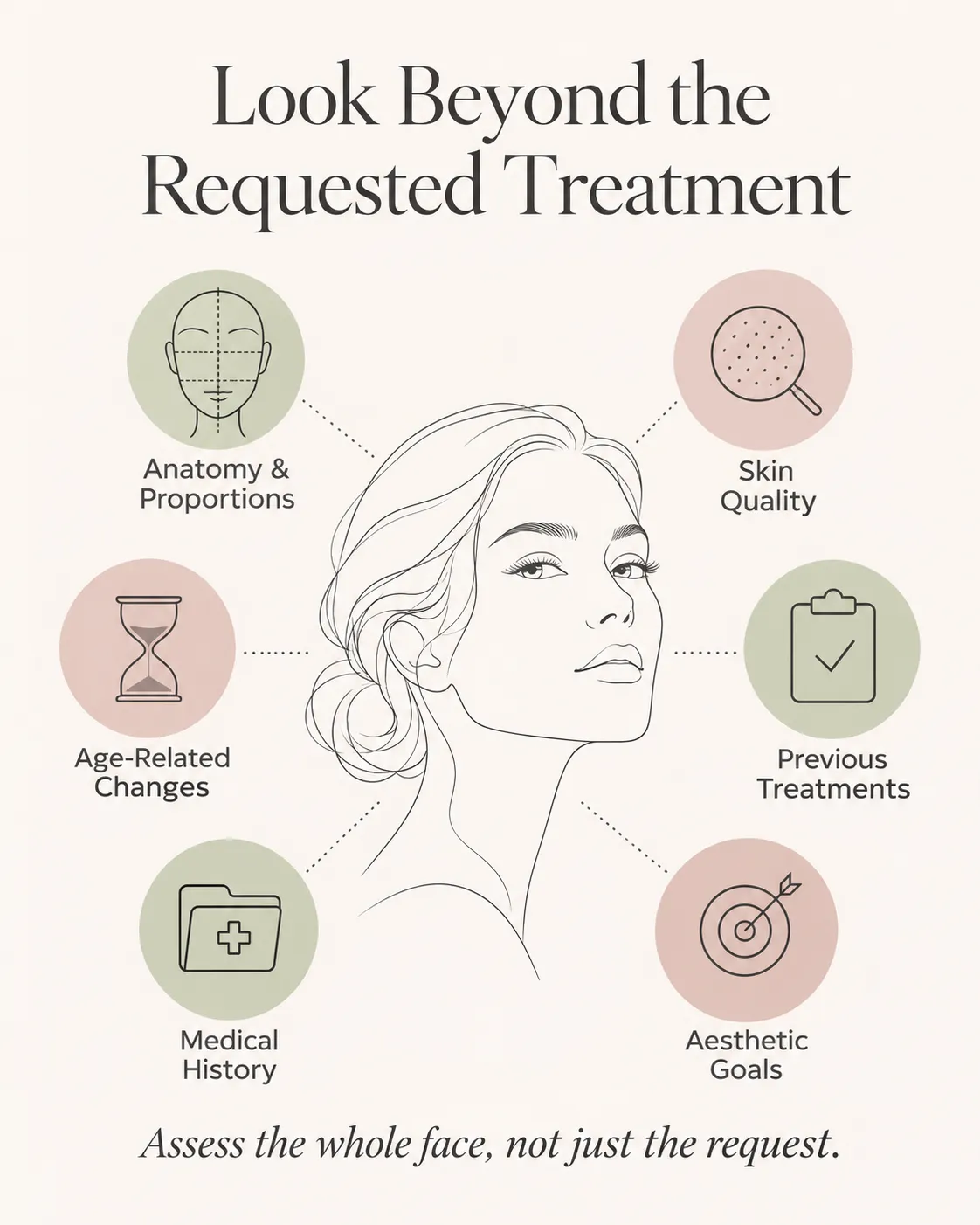
The ability to look beyond the requested procedure is an essential consultation skill.
Instead of asking, "How can I perform the treatment they want?", ask yourself, "What is contributing to the concern they have described?"
Consider the wider picture:
- Facial anatomy and proportions.
- Skin quality and condition.
- Age-related changes.
- Previous aesthetic treatments.
- Medical history and relevant contraindications.
- The patient's overall aesthetic goals.
Your role is to assess the patient holistically and recommend an appropriate treatment plan, rather than simply deliver the procedure they have requested.
And sometimes, the best recommendation is no treatment at all.
Being prepared to explain why a treatment is unsuitable, or why an alternative approach would be more appropriate, demonstrates professional integrity. It also helps build the kind of trust that encourages patients to return.
4. Communicate risk and limitations clearly
Aesthetic medicine is often presented as quick, convenient and relatively straightforward. However, every intervention carries potential risks, and patients need to understand these before consenting.
Informed consent is much more than asking a patient to sign a form.
It requires a meaningful conversation about the proposed treatment, expected benefits, material risks, potential complications, alternatives and the likely recovery process.
Avoid using vague reassurances such as "There is nothing to worry about" or "It's a very simple procedure."
Instead, explain risks in language the patient can understand. Check their understanding and give them an opportunity to ask questions.
It is also important to discuss limitations and uncertainty. Outcomes vary between individuals, and no ethical practitioner should guarantee a particular result.
Patients should understand what happens if they are unhappy with their outcome, what follow-up arrangements are available, and how complications will be managed.
Clear communication before treatment can prevent misunderstandings afterwards.
5. Use visual communication to support understanding
Aesthetic concerns are often difficult to describe using words alone.
A patient may use the term "tired-looking" to describe several different concerns, while a practitioner may interpret that description differently.
Visual communication can help bridge this gap.
With appropriate consent and secure handling of clinical photographs, standardised photography can help patients and practitioners assess baseline features and discuss treatment goals.
Other useful approaches include:
- Using anatomical diagrams to explain facial structures.
- Showing appropriate before-and-after photographs to illustrate realistic possibilities.
- Using mirrors to identify and discuss specific areas of concern.
- Drawing or annotating photographs to clarify proposed treatment areas.
However, be careful when using before-and-after photographs. They should be representative, appropriately consented and presented without implying that every patient will achieve the same result.
The purpose of visual communication is to improve understanding, not to create unrealistic expectations.
6. Pay attention to emotional drivers and psychological suitability
Aesthetic treatments are not purely physical interventions. Appearance can be closely connected to confidence, identity, relationships and emotional wellbeing.
Understanding why someone wants treatment is therefore an important part of assessing suitability.
Most patients seeking aesthetic treatment have reasonable motivations and expectations. However, practitioners should be alert to signs that a patient's expectations or relationship with their appearance may make treatment inappropriate.
For example, be cautious if a patient:
- Expects treatment to resolve relationship, career or personal difficulties.
- Describes an overwhelming preoccupation with a perceived physical flaw.
- Has repeatedly sought treatments but remains dissatisfied with the results.
- Requests increasingly extensive treatment despite having little objective need.
- Appears distressed or pressured into making a treatment decision.
These observations do not automatically indicate a psychological disorder, but they warrant further exploration.
Where appropriate, use validated screening tools, seek additional professional input or refer the patient for psychological assessment.
Never feel obliged to proceed with treatment simply because a patient is willing to pay for it.
The responsibility to protect patients includes recognizing when treatment may not be in their best interests.
7. Give patients permission to say no
A good consultation should never feel like a sales appointment.
Patients need to feel comfortable declining treatment, asking for more information or taking time to consider their options.
This is particularly important when discussing elective aesthetic procedures. Decisions should be voluntary and free from pressure.
Avoid creating urgency through limited-time offers, suggesting that patients will miss an opportunity, or encouraging them to book while they are still processing the information.
A useful phrase is:
"There's no need to make a decision today. I'd rather you had time to think about everything we've discussed and feel completely comfortable with your decision."
This approach demonstrates respect for patient autonomy and reinforces the professional relationship.
It also reduces the likelihood of patients proceeding with treatment they later regret.
8. Finish with a clear, shared treatment plan
Even an excellent consultation can lead to disappointment if the patient leaves with a different understanding of what has been agreed.
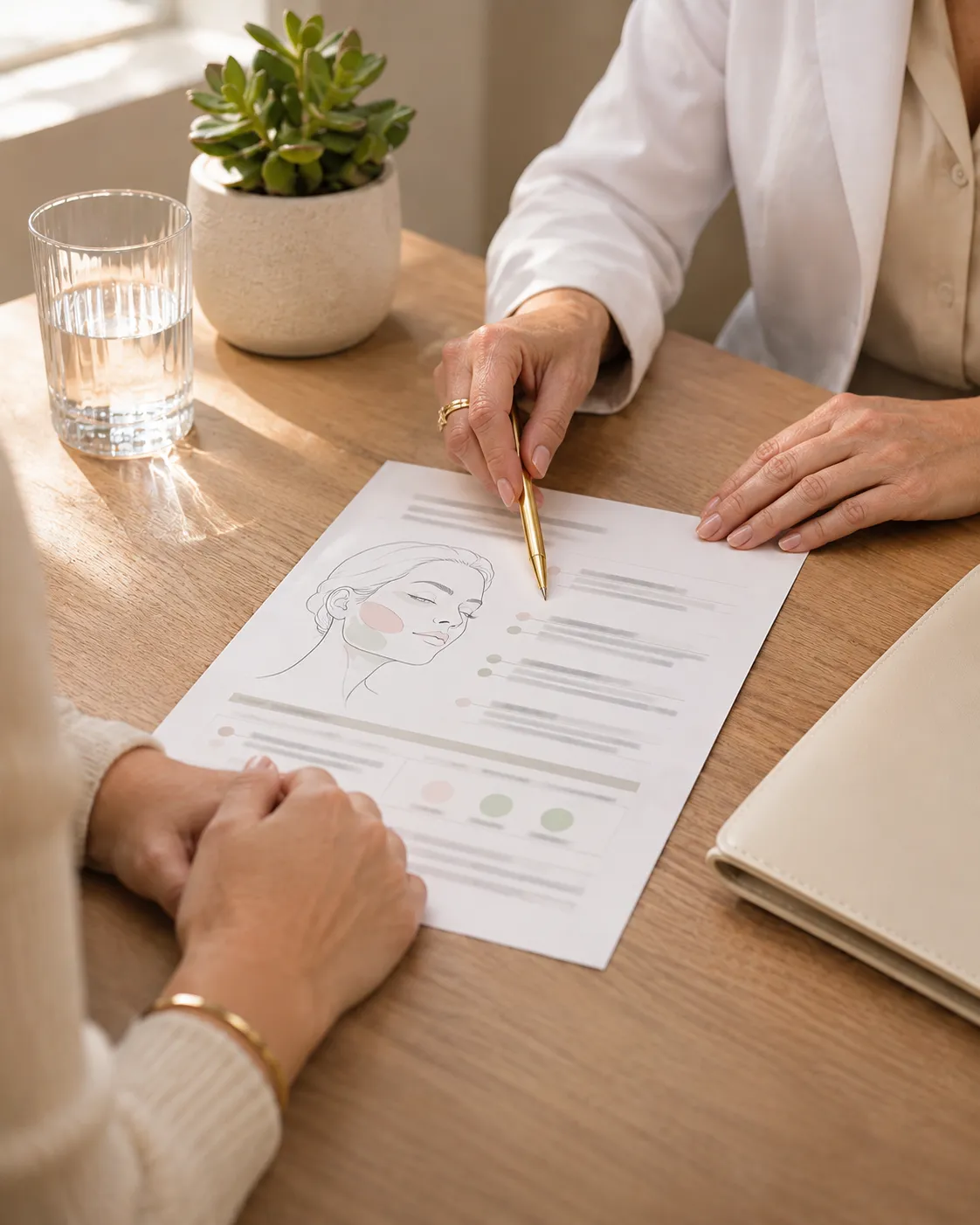
Before concluding, summarise the key points of your discussion.
Explain:
- The concerns you have identified.
- The treatment options you have considered.
- Your recommended approach and why.
- The expected benefits and realistic limitations.
- Potential risks and recovery considerations.
- The likely number and timing of treatments, where relevant.
- The arrangements for follow-up and review.
Ask the patient to explain their understanding of the proposed plan in their own words. This is a useful way to identify misunderstandings before they become problems.
Document the consultation thoroughly, including the patient's stated goals, clinical assessment, discussion of risks and benefits, consent process and agreed treatment plan.
A shared understanding creates a much stronger foundation for a positive patient experience.

The consultation doesn't end when the patient leaves
Preventing disappointing outcomes is not just about what happens during the initial appointment.
Follow-up is an important part of the patient journey.
Patients need to know when they should expect to see results, whether swelling or other temporary effects are normal, and who to contact if they have concerns.
Arrange appropriate reviews and encourage patients to communicate any unexpected changes or dissatisfaction.
If a patient is unhappy, listen carefully before becoming defensive. Try to understand whether the issue relates to the clinical outcome, unmet expectations, communication or something else.
A calm, supportive response can make a significant difference to how a patient experiences the situation.
Importantly, a disappointing outcome should also prompt reflection. Could the concern have been identified during the consultation? Were expectations sufficiently explored? Was the treatment plan appropriate?
Learning from these experiences helps us improve both our clinical practice and our communication skills.
Better consultations create better foundations for better outcomes
Aesthetic healthcare professionals understandably invest considerable time in developing their technical abilities. However, technical excellence alone does not guarantee patient satisfaction.
The ability to listen, ask insightful questions, recognize unrealistic expectations, assess psychological suitability and communicate limitations is equally important.
A successful consultation is not one in which you persuade a patient to have treatment. It is one in which you help them make an informed decision about what is appropriate for them.
Sometimes that decision will be to proceed with treatment. Sometimes it will be to choose a different approach. And sometimes it will be not to treat at all.
By making consultation skills a central part of professional development, we can reduce avoidable disappointment, strengthen patient relationships and support safer, more ethical aesthetic practice.
The best aesthetic outcomes don't start with a needle, a device or a treatment plan. They start with a conversation.