

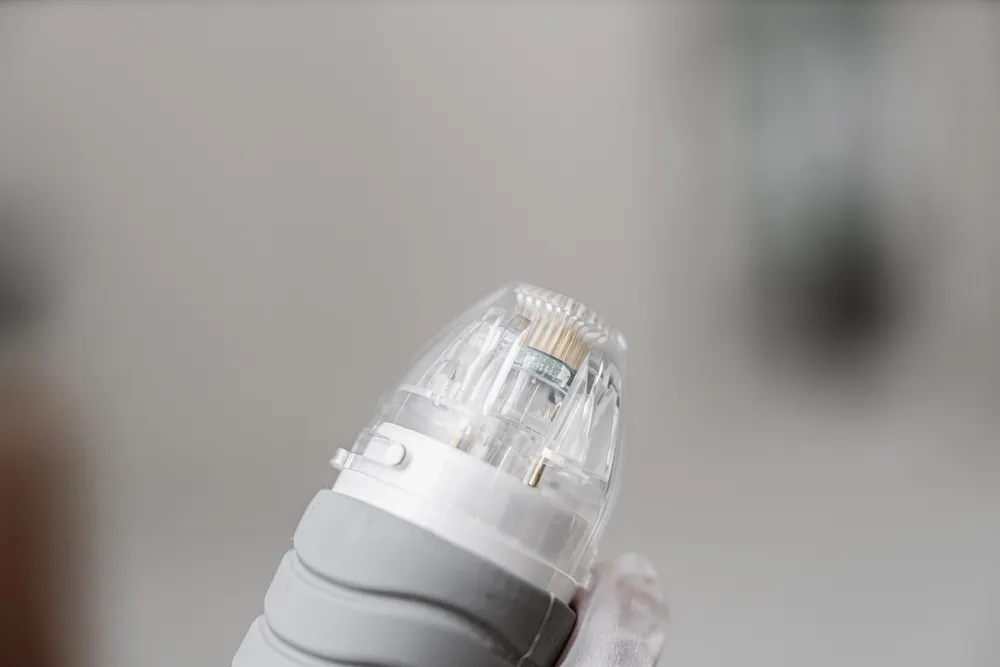
Radiofrequency microneedling has become one of the most talked-about technologies in aesthetic medicine. Patients ask about it, practices are investing in it, and manufacturers continue to introduce new platforms promising smoother skin, tighter contours, improved scars, and more.
But after evaluating 24 RF microneedling devices, one thing became especially clear to me:
The machine name is only part of the story.
Two devices can both be called “RF microneedling” while differing substantially in how they deliver energy, how deeply they treat, how they control heat, and how much information they give the clinician during a treatment.
That distinction matters.
And it matters even more now that the FDA has specifically warned about serious complications associated with certain uses of RF microneedling, including burns, scarring, fat loss, disfigurement, and nerve damage. U.S. Food and Drug Administration
So, what did evaluating 24 devices teach me?
1. “RF microneedling” is not one technology
The first lesson is that the term itself can be misleading.
RF microneedling generally combines two mechanisms: needles penetrate the skin, while radiofrequency energy creates controlled heating within or beneath the skin. But the way that energy is delivered can vary considerably between platforms.
Devices may differ in:
-
Monopolar versus bipolar RF
-
Insulated versus non-insulated needles
-
Needle depth and the range of available depths
-
Needle configuration and treatment area
-
Energy levels and pulse characteristics
-
How quickly RF energy is delivered
-
Whether energy is delivered before, during, or after needle insertion
-
Cooling and thermal-control features
-
Real-time feedback and monitoring
Those aren't merely technical specifications.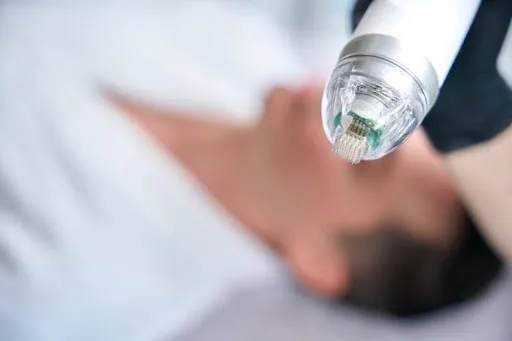
They can influence the treatment's clinical behavior and, potentially, its safety profile.
A 2026 systematic review of RF microneedling literature likewise highlighted substantial heterogeneity among devices and noted that technical parameters such as temperature, pulse width, and cooling have not been consistently reported in clinical studies.
2. More energy isn't automatically better
This may be one of the most important lessons for patients and practitioners alike.
It can be tempting to think of energy-based treatments as a simple equation:
More energy = more collagen = better results.
Biology doesn't work quite that way.
RF microneedling is intended to create a controlled thermal effect. The goal is to produce enough energy at the appropriate depth to stimulate the desired tissue response without creating unnecessary injury.
That makes where the energy goes at least as important as how much energy is delivered.
Depth, needle design, tissue characteristics, treatment area, pulse duration, and the clinician's technique all matter.
A device capable of delivering substantial energy isn't necessarily superior to one that delivers less. The better question is whether the device allows the practitioner to deliver the right amount of energy to the right tissue at the right depth for the particular patient.
3. Needle depth is a clinical decision not a marketing number
When comparing RF microneedling systems, needle depth can look like an easy specification to compare.
But a maximum depth listed on a brochure doesn't tell you whether that depth is appropriate for a particular patient or anatomical area.
The skin isn't the same thickness everywhere.
And facial anatomy isn't uniform.
The appropriate treatment approach for the cheeks may not be the same as the approach for the forehead, temples, jawline, neck, or areas where subcutaneous fat is relatively thin.
That is one reason I don't think patients should choose an RF microneedling treatment based simply on the device advertising the “deepest” treatment.
Deeper is not inherently better.
In some areas, unnecessarily aggressive treatment can be counterproductive.
4. The treatment parameters may matter more than the logo
When evaluating multiple platforms, it's easy to become distracted by brand recognition.
But I would encourage clinicians to look beyond the logo.
Ask:
What can the device actually control?
Can you precisely adjust needle depth? Can you control energy independently? Does the system provide meaningful feedback? Are the treatment parameters reproducible? Does the handpiece allow the practitioner to treat delicate anatomical areas appropriately?
These questions tell you much more about a platform than a promotional claim about “next-generation” technology.
The FDA notes that RF microneedling devices are Class II medical devices cleared through the 510(k) pathway, and that authorization applies to specific devices and specific indications. U.S. Food and Drug Administration+1
That distinction is important: FDA clearance is not the same thing as a declaration that every possible use of a device is safe or effective.
5. Evidence needs to be device-specific whenever possible
Another lesson from evaluating so many systems is that we need to be careful when transferring evidence from one RF microneedling device to another.
A study showing good results with one platform doesn't automatically prove that every RF microneedling device will produce identical results.
That's because the devices can differ in energy delivery, needle design, depth, treatment parameters, and other technical characteristics.
The broader evidence for RF microneedling is encouraging. A 2026 systematic review covering 41 studies found evidence of improvement in several dermatologic indications, including atrophic acne scars and photoaging, while also noting substantial variation in technical parameters and the need for more standardized reporting and head-to-head comparisons. PubMed
In other words, the category has evidence behind it, but the category is not a single machine.
6. Safety isn't just about the device
This is perhaps the most important point.
A sophisticated device in inexperienced hands is not necessarily a safe treatment.
RF microneedling combines mechanical penetration with thermal energy. That means treatment requires an understanding of anatomy, tissue response, energy delivery, patient selection, and technique.
The FDA recommends that patients seek microneedling from a healthcare provider with special training because penetrating devices can reach nerves, blood vessels, and other structures. U.S. Food and Drug Administration
And the FDA's October 2025 safety communication is a reminder that “minimally invasive” does not mean “risk-free.” Serious complications have been reported with certain uses of RF microneedling, including burns, scarring, fat loss, disfigurement, and nerve injury. U.S. Food and Drug Administration
That doesn't mean RF microneedling is inherently dangerous.
It means we should respect the technology.
7. Fat preservation deserves particular attention
One of the areas I pay close attention to when evaluating RF technology is the relationship between treatment depth and facial fat.
A patient's goal is usually not simply to make the skin tighter.
They want to look better.
That distinction matters because facial rejuvenation is three-dimensional. Skin quality is only one component of facial appearance. Volume, fat compartments, muscle, bone structure, and the relationship between these tissues all contribute to how a face ages.
Consequently, an aggressive thermal treatment isn't automatically a better rejuvenation treatment.
The FDA's warning about reported fat loss makes this an especially important consideration when discussing RF microneedling with patients. U.S. Food and Drug Administration
8. “Minimal downtime” shouldn't become the main selling point
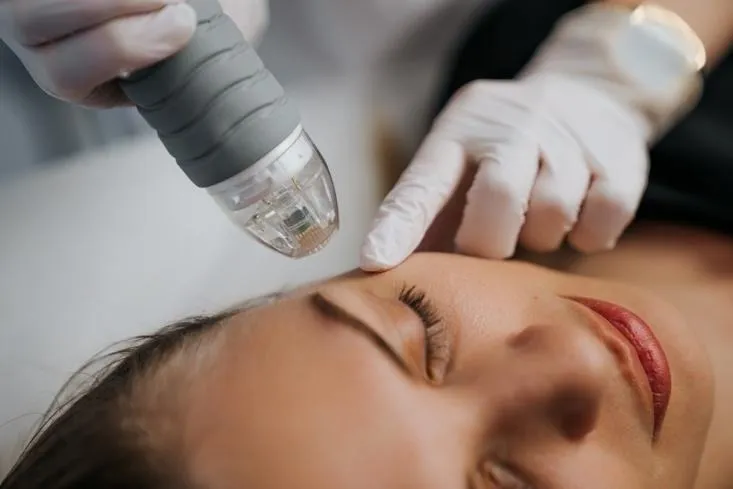
One reason RF microneedling became so popular is that it can offer a compelling combination of treatment and recovery.
Patients often want meaningful improvement without the downtime associated with more aggressive resurfacing procedures.
That's a legitimate advantage.
But I think the conversation has sometimes become too focused on downtime.
The better questions are:
What are we treating?
What degree of improvement is realistic?
What risks are we accepting to achieve that improvement?
And is this the right technology for this particular patient?
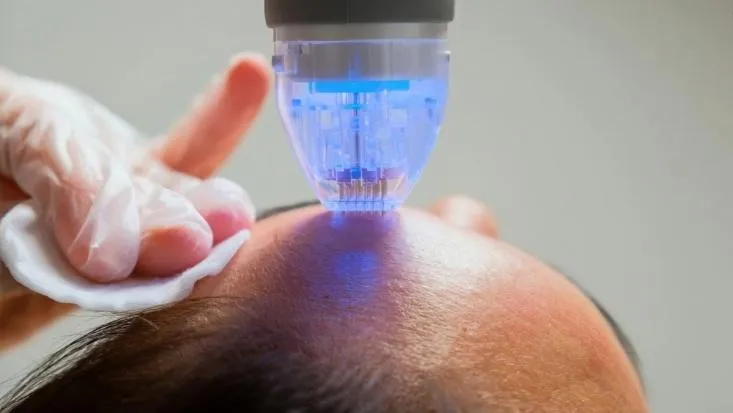
A 2026 systematic review of facial rejuvenation studies found generally favorable outcomes, with erythema and edema among the most common adverse effects and generally high patient satisfaction. PubMed+1
But those favorable results shouldn't obscure the importance of patient selection and technique.
9. There is no universal “best” RF microneedling device
After looking at 24 platforms, I would be very cautious about declaring one device the absolute winner.
The better question is:
Best for what?
A device might be particularly well suited to facial rejuvenation. Another might offer advantages for acne scarring. Another might provide useful control for treating different anatomical areas.
And even the best device on paper can produce disappointing results if the treatment parameters or technique aren't appropriate.
Instead of asking, “Which RF microneedling machine is the best?” I prefer to ask:
Which platform gives the clinician the best combination of control, predictability, evidence, safety features, and versatility for the patients being treated?
That's a much more useful question.
10. The operator remains one of the most important variables
Technology gets the attention, but the clinician ultimately makes the treatment decisions.
The practitioner chooses:
-
Whether the patient is an appropriate candidate
-
Which areas should be treated
-
Needle depth
-
Energy settings
-
Treatment density
-
Number of passes
-
How aggressively to treat different anatomical areas
-
When to stop
-
How to manage the recovery period
Those decisions can profoundly influence the outcome.
This is why I wouldn't recommend choosing a provider simply because they own the newest RF microneedling device.
I'd choose the provider who understands the technology and, more importantly, understands anatomy.
So, what did evaluating 24 devices really teach me?
It taught me that RF microneedling is neither a miracle treatment nor a gimmick.
It is a sophisticated category of energy-based technology with legitimate clinical applications—and meaningful risks.
The research increasingly supports its usefulness for concerns such as acne scarring, skin texture, wrinkles, and laxity. At the same time, the literature still has important gaps, particularly around standardized treatment parameters, long-term outcomes, and direct comparisons between devices. PubMed+1
And the FDA's recent safety communication makes one point impossible to ignore:
How RF microneedling is performed matters.
If you're considering treatment, don't focus only on the name of the machine.
Ask who is performing the treatment, what experience they have with the technology, what the device is actually cleared to do, why a particular treatment depth and energy level have been chosen for you, and what risks are relevant to your anatomy and goals.
The best RF microneedling treatment isn't necessarily the most powerful one.
It's the one that is appropriate, controlled, evidence-informed, and tailored to the patient.
This article is intended for educational purposes and does not replace an individual medical consultation. Device indications and regulatory status can change, so patients should discuss the specific device and proposed treatment with a qualified healthcare professional.