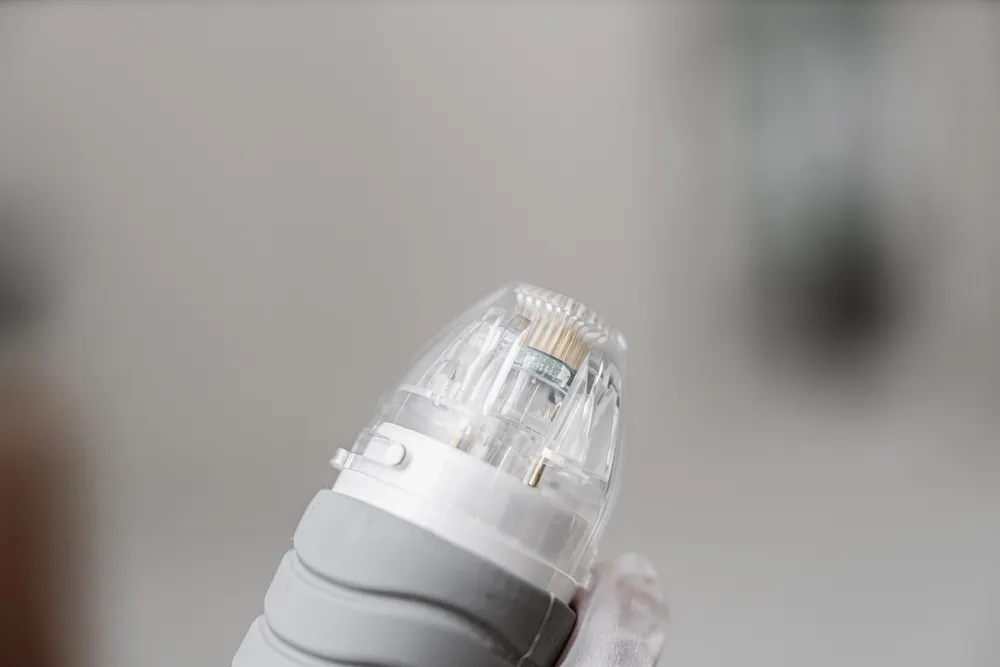


Aesthetic medicine is an attractive opportunity for physicians and medical practices looking to diversify revenue, deepen patient relationships, and build a new service line.
But let's be honest: buying a laser, ordering some filler, and putting "aesthetics" on your website does not automatically create a profitable business.
I have watched practices approach aesthetics from both directions. Some treat it as a natural extension of medicine and build a thoughtful, sustainable service line. Others invest heavily in equipment, training, inventory, and marketing before they have a clear understanding of who will provide the treatments, who the patients will be, what the margins look like, and how long it will take to reach profitability.
The difference is rarely the technology.
It is the business model.
Before you add aesthetics to your medical practice, you need to understand the real return on investment—not just the revenue potential.
Start With the Question: Why Aesthetics?
The first question isn't, "Which laser should I buy?"
It is:
"What role do I want aesthetics to play in my practice?"

The Revenue Number Is Not Your ROI
This is where many aesthetic business plans go wrong.
Imagine that a new treatment generates $1,500 in revenue.
It is tempting to think:
$1,500 = $1,500 of new income.
It doesn't.
You have to subtract the costs associated with producing that revenue.
Depending on the treatment, your expenses may include:
- Product or consumable costs
- Injector or provider compensation
- Staff time
- Room utilization
- Credit-card processing
- Marketing
- Equipment payments or depreciation
- Maintenance contracts
- Software
- Medical supplies
- Training and continuing education
- Insurance
- Administrative overhead
- Financing costs
- Follow-up care
- Discounts and promotional pricing
Your gross revenue is only the beginning of the calculation.
The number that matters is the contribution your aesthetic service makes to the practice after its variable and incremental costs.
Calculate Contribution Margin Before You Buy Equipment
One of the most useful concepts for a physician considering aesthetics is contribution margin.
In simple terms:
Revenue − variable costs = contribution margin
For example, suppose a treatment is priced at $1,200 and the consumable cost is $300.
That leaves $900 before considering the other costs associated with operating the practice.
Now consider a different scenario: you purchase a $150,000 device.
The device may generate excellent revenue, but you still need enough treatment volume to cover the equipment investment, financing, maintenance, staffing, marketing, and other expenses.
That's why the question isn't:
"How much can I charge for this treatment?"
The better question is:
"How many profitable treatments can I realistically perform, at what frequency, with what staffing requirements, and how long will it take to recover my investment?"
The Three Numbers I Want Every Physician to Know
Before adding an aesthetic service, I would want to know three numbers.
1. Average Revenue Per Treatment
What does the patient actually pay?
Don't use your menu price if patients routinely receive discounts, packages, memberships, or promotions.
Use your realized average revenue.
2. Variable Cost Per Treatment
What does it cost you to perform the treatment?
For injectables, this may be heavily influenced by product utilization.
For devices, the economics may be different because the largest cost is often the capital investment rather than the individual treatment consumable.
3. Monthly Treatment Volume
How many treatments can you realistically perform?
This is where projections frequently become overly optimistic.
A device manufacturer may show you what happens when a machine is busy all day.
Your practice needs to know what happens when the machine is used four times a week.
Those are very different businesses.
The Equipment Trap
Lasers, energy-based devices, body-contouring platforms, and other aesthetic technologies can be extraordinary tools.
They can also become extraordinarily expensive furniture.
The mistake is not purchasing technology.
The mistake is purchasing technology before proving demand.
Before signing a lease or financing agreement, ask:
- How many patients currently request this treatment?
- How many patients could reasonably be candidates?
- What percentage of them are likely to purchase?
- What is the expected treatment frequency?
- How much revenue will each patient generate?
- What is the consumable cost?
- What is the expected useful life of the equipment?
- What are the maintenance requirements?
- What happens if demand is 50% lower than projected?
That last question is particularly important.
Build the business case around conservative volume, not the manufacturer's best-case scenario.
Don't Forget the Cost of Your Time
Physicians are particularly vulnerable to overlooking this expense.

Your Existing Patient Base Is an Asset
One of the biggest advantages an established medical practice has over a startup med spa is something money can't easily buy:
patients who already know and trust you.
If your existing patients are appropriate candidates for aesthetic services, you don't necessarily have to acquire every aesthetic patient through advertising.
That can dramatically change the economics.
A patient who already visits your practice may require considerably less marketing expenditure than a brand-new patient who has never heard of you.
But don't assume every patient wants aesthetics.
Listen.
Educate.
Offer appropriate services.
And let the patient decide.
The goal isn't to turn every medical encounter into a sales opportunity.
The goal is to make appropriate aesthetic care available to patients who are interested in it.
The Hidden ROI: Patient Retention
There is another part of the equation that doesn't always show up on the treatment-level P&L.
Aesthetics can create additional reasons for patients to remain connected to your practice.
A patient may initially come for one aesthetic treatment and later become interested in skincare, injectables, laser treatments, or other services.
That can create a broader relationship with the practice.
But again, the economics should be measured rather than assumed.
Track:
- New aesthetic patients
- Existing patients who add aesthetics
- Repeat treatment rates
- Average annual aesthetic spend per patient
- Cross-referrals between medical and aesthetic services
- Patient acquisition cost
- Patient retention
The most valuable aesthetic patient may not be the person who spends the most on the first visit.
It may be the patient who returns consistently for several years.
Packages Can Improve Predictability—But Be Careful
Packages and treatment plans can be useful because they encourage patients to think about aesthetics as an ongoing process rather than a single transaction.
For example, many treatments are inherently serial or maintenance-based.
But discounting can quickly destroy your margin.
Before creating a package, calculate the economics of the entire package, not simply the price of the individual treatments.
Ask:
What does this patient actually contribute after product, labor, discounts, and overhead?
A package that produces more revenue but less contribution is not necessarily a better deal for your practice.
Marketing Is an Investment, Not an Afterthought
Aesthetic medicine is highly competitive.

"Lots of likes" is not an ROI calculation.
Your Break-Even Point Matters More Than Your Revenue Goal
Let's say your new aesthetic service requires $100,000 of incremental investment.
If your average contribution margin is $500 per treatment, you need approximately:
200 treatments to recover that investment.
That number immediately gives you something useful to work with.
If you expect 10 treatments per month, you're looking at approximately 20 months before recovering the initial investment—before considering financing costs, taxes, maintenance, or changes in volume.
If you can realistically perform 25 treatments per month, the picture changes.
This is why I encourage physicians to build an actual spreadsheet before making an equipment purchase.
Revenue projections are exciting. Break-even analysis is useful.
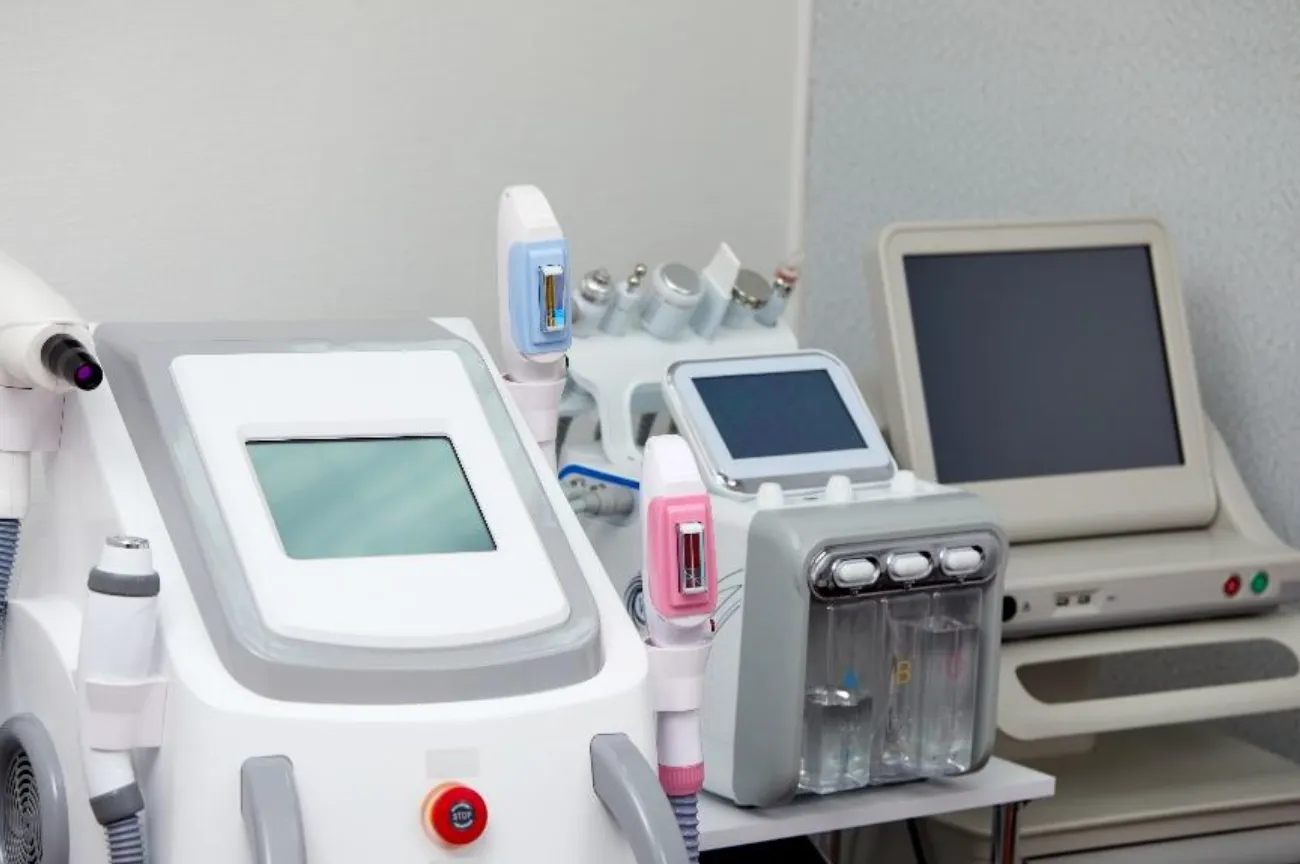
The Best Aesthetic Practice Is Not Necessarily the One With the Most Devices
There is a tendency in aesthetics to equate sophistication with the number of machines in the treatment room.
I don't.
Don't Underestimate Training
One of the worst places to economize is clinical training.
Aesthetic medicine may look deceptively simple from the outside.
Injecting a filler or operating an energy-based device is not merely a technical procedure.
It requires understanding anatomy, patient selection, contraindications, complications, emergency management, and appropriate treatment planning.
Budget for initial training.
Budget for advanced training.
Budget for complication management training.
And budget for ongoing education.
The cost of training is an investment in both patient safety and the long-term reputation of your practice.
Reputation Is an Asset on the Balance Sheet—Even If It Isn't Listed There
Aesthetic medicine is unusually dependent on trust.
Patients are allowing you to change something about their appearance. That requires an enormous amount of confidence.
A single poor outcome can have consequences that extend far beyond the economics of one treatment.
Your reputation affects:
- Referrals
- Reviews
- Patient retention
- New-patient acquisition
- Staff recruitment
- Physician recruitment
- Community perception
That makes clinical quality part of your financial strategy.
The cheapest procedure is not necessarily the most profitable procedure.
The most profitable practice is one that patients trust enough to return to and recommend to others.
So, What's the Honest ROI?
The honest answer is:
It depends.
Aesthetics can become an excellent addition to a medical practice, but there is no universal ROI.
Your return will depend on:
- Your patient population
- Your local market
- Your pricing
- Your staffing model
- Your treatment mix
- Your utilization
- Your product costs
- Your equipment investment
- Your marketing costs
- Your clinical capacity
- Your ability to retain patients
The practices that tend to approach aesthetics most successfully don't start by asking:
"What's the most exciting device I can buy?"
They start by asking:
"What do my patients need, what can my practice deliver exceptionally well, and what does the math look like?"
Then they build from there.
The Aesthetic ROI Checklist
Before adding a new aesthetic service, make sure you can answer these questions:
- Demand: How many appropriate patients are likely to purchase?
- Price: What will patients actually pay?
- Cost: What does each treatment actually cost?
- Margin: What is the contribution per treatment?
- Volume: How many treatments can we realistically perform?
- Capacity: Who will perform them, and when?
- Investment: What capital is required?
- Break-even: How many treatments are needed to recover the investment?
- Marketing: How much will it cost to acquire new patients?
- Retention: How frequently will patients return?
- Safety: Are our training and emergency protocols adequate?
- Compliance: Does our business and clinical model comply with applicable laws and regulations?
- Scalability: Can this service grow without proportionally increasing costs?
If you don't know the answers, you're not ready to make the investment.
And that's okay.
Do the homework first.
The Bottom Line
Adding aesthetics to a medical practice can be much more than adding another revenue stream.
Done thoughtfully, it can create a new dimension of patient care, strengthen relationships with existing patients, diversify practice revenue, and create meaningful opportunities for growth.
But aesthetics is still a business.
The beautiful treatment room, the newest device, and the impressive treatment menu don't determine whether the venture succeeds.
The numbers do.
Know your costs.
Know your margins.
Know your patient.
Know your capacity.
Know your break-even point.
And never let the excitement of a new technology replace a well-thought-out business plan.
Because the goal isn't simply to add aesthetics to your medical practice.
The goal is to build an aesthetic service that is clinically excellent, financially sustainable, and genuinely valuable to your patients.
— Dr. Ellen Turner